

Existence & Spirituality2 min read
The Art of Sisyphus: The Aesthetics of Persistence
“One must imagine Sisyphus happy.” We explore Camus’s absurd hero and the aesthetics of persistence through examples from art history, from Titian to Stuck.
By artcycle

Sisyphus rolls the rock, as if time has stopped. Is this loop only a curse? Or is it an endless repetition through which a person brings themselves into being?
Sisyphus keeps pushing his rock. While the whole universe is silent, he hears only his own breath. This is no longer a punishment; it is a ritual, a state of resistance. Artists have not forgotten him, because he is both the fate of humankind and creativity itself.
Sisyphus, Titian (1548)
A prisoner lit by Baroque light. In that moment, just before the rock falls, time is compressed. In this painting Sisyphus’s face shows not anger but acceptance.
Sisyphus, Franz von Stuck (1920)
Half naked, muscles taut, an expressionless face. This Sisyphus represents an inner silence more than a physical struggle. He carries not a rock but the weight of existence.
Sisyphus 4, Kim Myung-Sook (1991)
With a figurative language nourished by abstract expressionism, the artist blends the human relationship with nature and the universe with themes of loneliness and inner struggle. She invites viewers to reflect on their own inner journey.
Camus and a Philosophical Turn
This loop reflects the absurdity of human life: we work, we search for meaning, but in the end everything returns to the beginning. Yet Camus sees Sisyphus not as a tragic figure but as a hero who resists. Sisyphus is aware of his punishment and still does not give up. Although the rock falls every time, he keeps pushing it again and again.
“One must imagine Sisyphus happy.”
“One must imagine Sisyphus happy.” He has accepted his own fate, embraced the absurd and become free within this meaninglessness.
So for Camus, true heroism lies not in escape but in living the absurd knowingly and creating meaning within it. Sisyphus’s rock is like the struggles of our daily lives. But to keep pushing that rock is an existential revolt, a work of art.
Newsletter · Free, no account needed
New pieces in your inbox
We let you know when a new Journal piece is published. You can choose other topics too.
From Discover
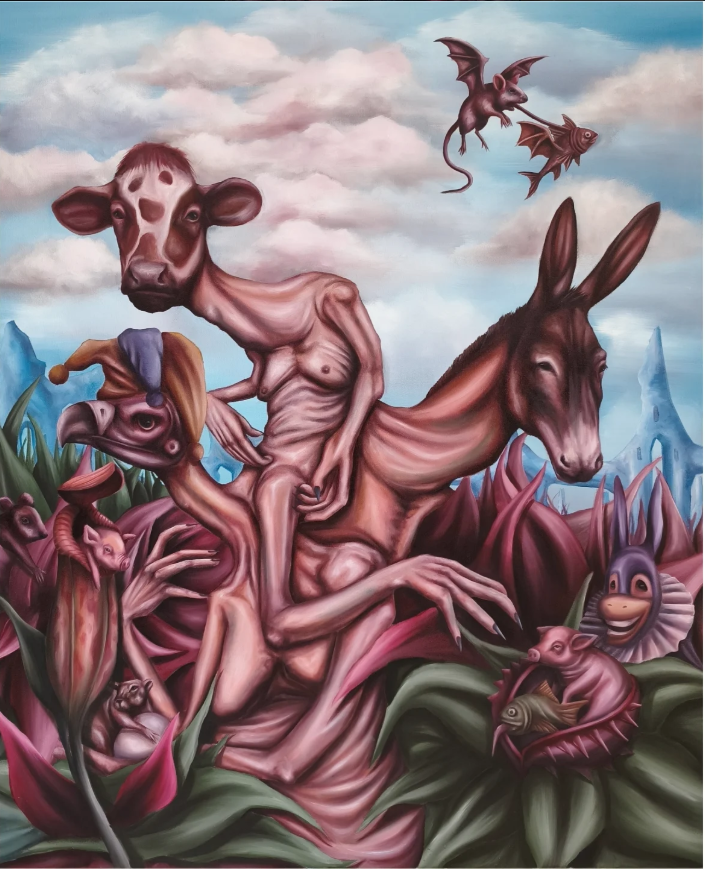
When We Woke, Our Bodies Were Not Our Own
Oil on canvas, 2025
120 × 100 cm · 47.2 × 39.4 in
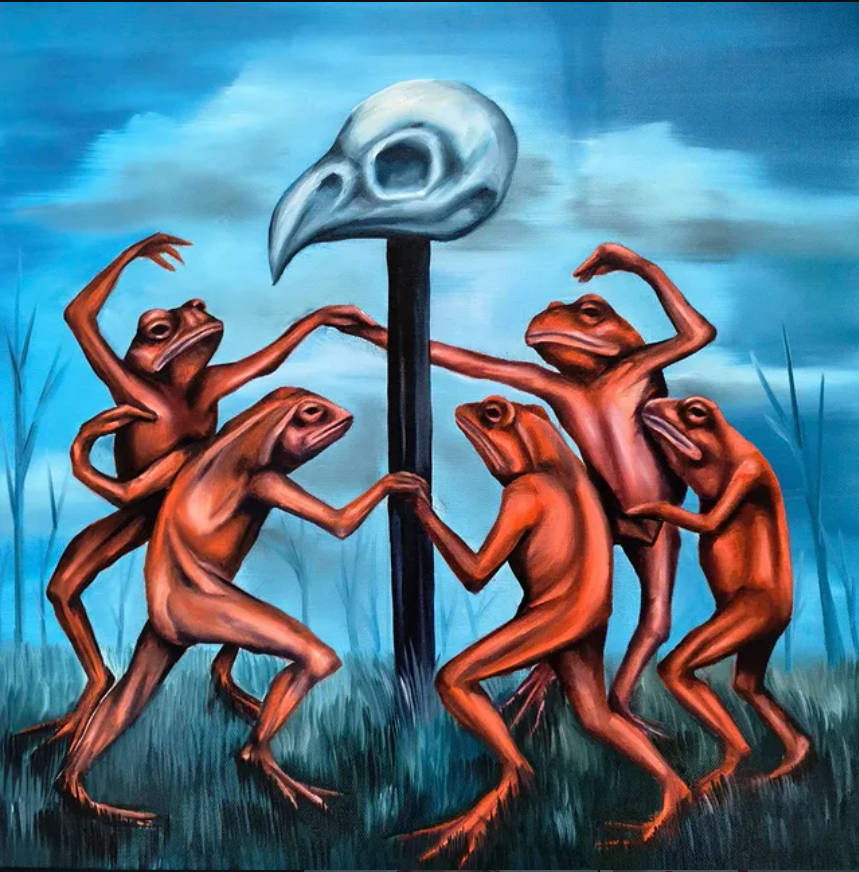
Dance
Oil on canvas, 2022
40 × 40 cm · 15.7 × 15.7 in


Related articles
Existence & Spirituality ·
Confrontation: Meeting Inner and Outer Truths
“The heaviest burden a person can carry is themselves.” From Jung to Goya, we look through art at the moments of confrontation we run from, and at our shadow.
Essays & Criticism ·
Absurd Creation: Making Art Without Seeking Meaning
Art does not console; it confronts. In the light of Albert Camus’s philosophy of the absurd, we look at the absurdity of existence in the works of Louise Bourgeois, Francis Alÿs and Bruce Nauman.
Existence & Spirituality ·
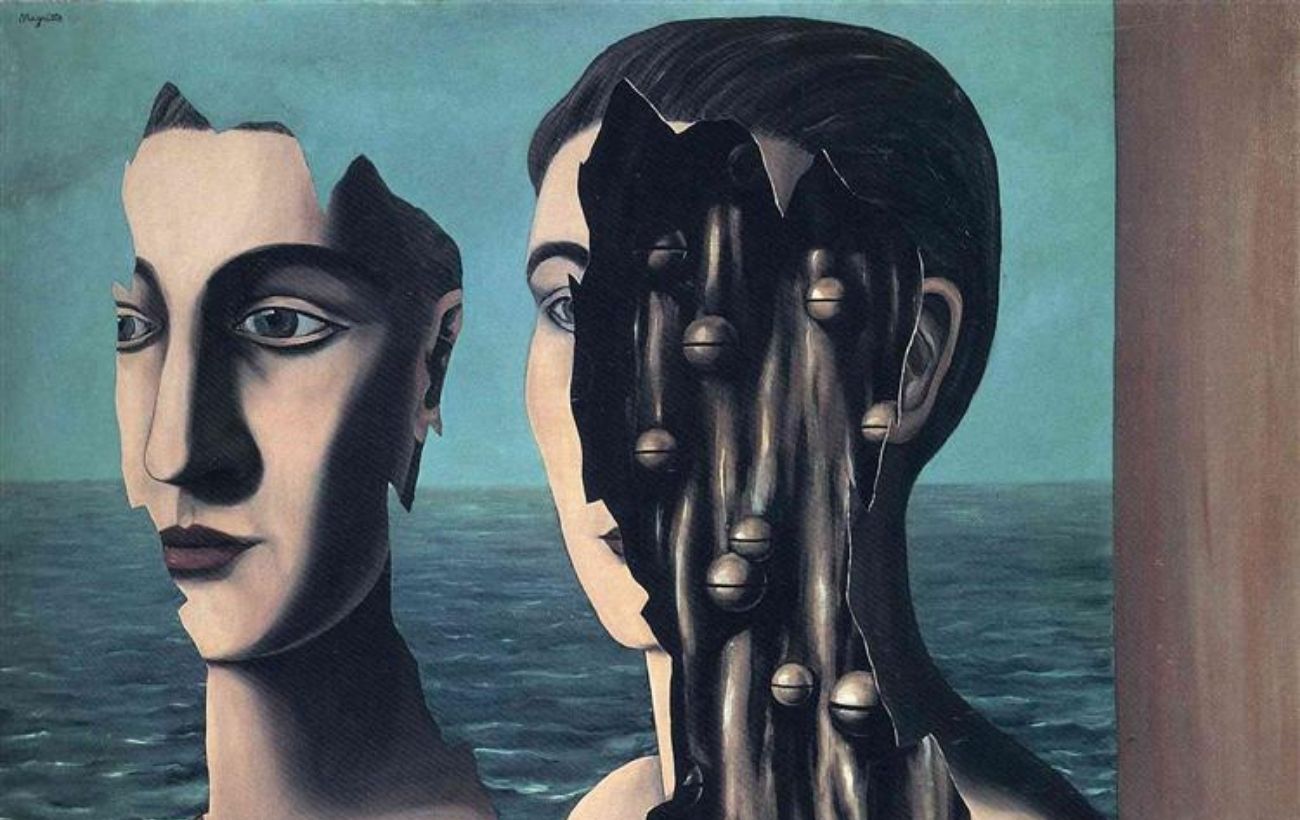
There Is Someone Else Inside Me: Coping and Making Peace with the Crowd Within
The feeling that “there is someone else inside me” is not an illness but the mind’s shelter. We explore dissociation as an art of reconciliation through Phil Stutz and Magritte.


